Minerals & Muscle Health Vol.2: POTASSIUM
Potassium’s role in muscle health is crucial for proper muscle contraction and nerve signalling. It functions as a key electrolyte that enables nerves and muscles to communicate. Allowing for coordinated muscle function and movement. Without adequate potassium, muscles can experience weakness, cramping and spasms.
Potassium also helps maintain fluid balance within cells, is necessary for synthesizing protein and helps regulate heart rhythm.
Muscle Contraction: Potassium is essential for normal muscle contraction, including the heart muscle. It allows electrical signals to be sent between nerves and muscles.
Nerve Signalling: Potassium is vital for the proper functioning of nerves, which allows then to respond to stimulation and trigger a muscle response.
Prevents Cramps: A lack of potassium can lead to muscle spasms and cramps because the communication between nerves and muscles malfunction.
Energy Production: Potassium plays a role in the body’s ability to produce and store energy and is important for synthesizing protein and metabolizing carbohydrates.
Fluid Balance: Potassium helps regulate the fluid balance inside cells, necessary for all cell functions including those of muscle.
RDI Intake by age & sex:
Men 19+ yrs: 3,400mg
Women 19+ yrs: 2,600mg
Breastfeeding Women: 2,800mg
Pregnant Women: 2,900mg
1 – 3 yrs: 2,000mg
4 – 8 yrs: 2,300mg
9 – 13 yrs (males): 2,500mg
9 – 13 yrs (females): 2,300mg
14 – 18 (males): 3,000mg
14 – 18 (females): 2,300mg
A small drop in the blood potassium level often does not cause symptoms or causes mild to moderate symptoms, which may include:
- Constipation.
- Feeling of skipped heart beats or palpitations.
- Fatigue.
- Muscle damage.
- Muscle weakness or spasms.
- Tingling or numbness.
As you can see, Potassium is the major cation inside living cells. We need potassium to keep the electrochemical balance across cell membranes. This is vital to transmit nerve signals. This leads to skeletal muscle contraction, hormone release, and smooth muscle and heart contraction.
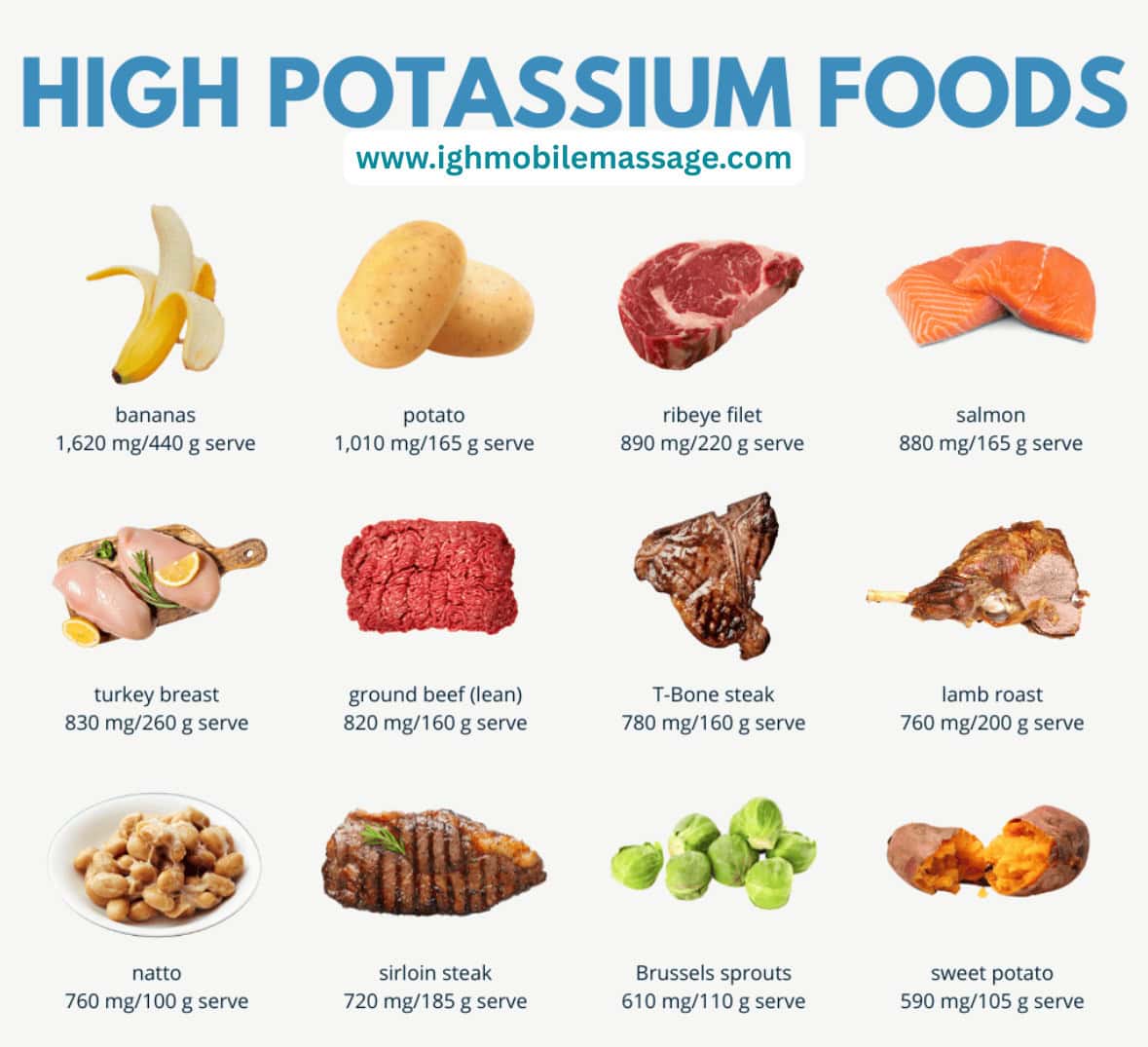
If you have any comments questions or concerns about how to get more POTASSIUM in your diet, don’t hesitate to reach out.