Minerals for Muscle Health Vol.3: MAGNESIUM
Magnesium plays a crucial role in muscle function by contributing to several key processes:
- Muscle Contraction and Relaxation: Magnesium helps regulate the balance of calcium in muscle cells. Calcium is essential for muscle contraction, and magnesium works to counteract it by promoting muscle relaxation after contraction. This balance ensures that muscles can contract when needed and relax afterward.
- Energy Production: Magnesium is involved in the production of ATP (adenosine triphosphate), the primary energy source for muscle contractions. Without adequate magnesium, muscle cells can’t efficiently produce ATP, which could impair muscle function and lead to fatigue.
- Nerve Function: Magnesium is important for proper nerve function, which is critical for sending signals to muscles to initiate movement. Magnesium helps stabilize the electrical activity in nerve cells, preventing over excitation and helping to maintain normal muscle function.
-
Prevention of Muscle Cramps: Magnesium may help prevent muscle cramps, as it supports the proper functioning of muscles and nerves. A deficiency in magnesium can lead to an imbalance in muscle contractions, contributing to cramps or spasms.
Magnesium is vital for muscle contraction, relaxation, energy production, and nerve signalling, making it essential for overall muscle function.
Now, let’s go over symptoms of deficiency….
Magnesium deficiency can lead to a variety of symptoms, ranging from mild to severe. Common symptoms of magnesium deficiency include:
- Muscle Cramps or Spasms: Since magnesium plays a key role in muscle contraction and relaxation, a deficiency can cause cramps, spasms, or twitching muscles.
- Fatigue and Weakness: Magnesium is involved in energy production, so low levels can lead to tiredness, weakness, or general fatigue.
- Tingling or Numbness: Magnesium deficiency can affect nerve function, leading to symptoms like tingling or numbness, often in the hands or feet.
- Irritability and Mood Swings: Magnesium has a role in regulating neurotransmitters, and its deficiency can lead to irritability, anxiety, or even depression.
- Heart Palpitations: Low magnesium levels can affect the electrical impulses in the heart, leading to irregular heartbeats or palpitations.
- Muscle Weakness: In addition to cramps, magnesium deficiency can cause overall muscle weakness, as the muscles may not be able to function properly.
- Bone Health Issues: Chronic magnesium deficiency may negatively affect bone health over time, as magnesium is important for calcium metabolism and bone formation.
- Nausea and Vomiting: Magnesium deficiency can cause gastrointestinal issues, such as nausea, vomiting, and a general feeling of being unwell.
- High Blood Pressure: Magnesium helps regulate blood pressure, and a deficiency may contribute to higher blood pressure levels.
- Constipation: Magnesium is important for healthy digestion, and a lack of it can lead to constipation or difficulty with bowel movements.
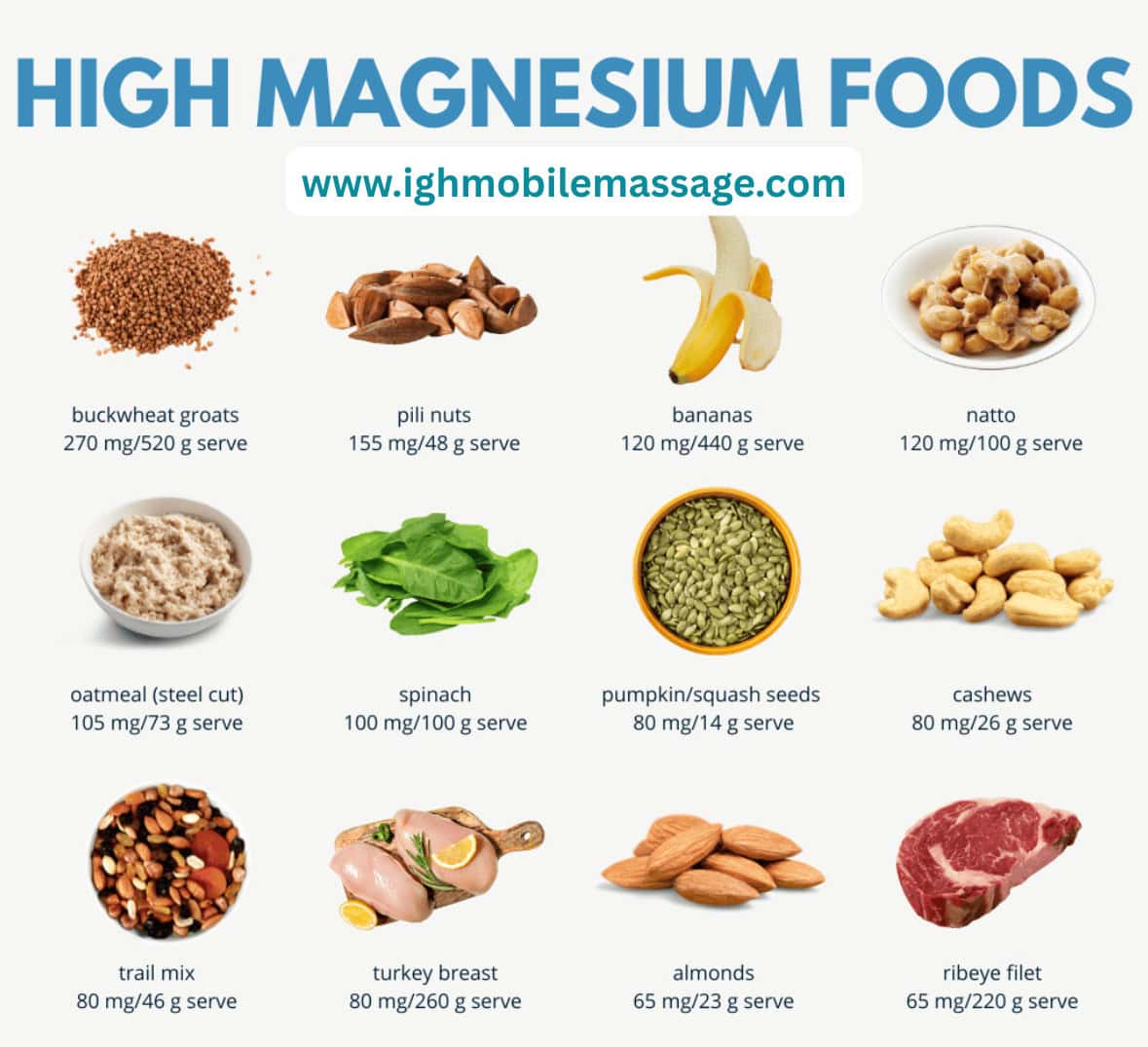
Foods that are highest in Magnesium for Optimal Muscle Function:
- Whole wheat: Most whole grains are great sources for Magnesium
- Spinach/dark leafy greens
- Quinoa
- Almonds, cashews, peanuts
- Dark Chocolate
- Black Beans
- Edamame
- Avocado
- Tofu
- Yogurt
What about the daily RECOMMENDED intake for women, men, children & pregnant/breastfeeding women:
Women: 310-320mg/day
Men: 400-420mg/day
Pregnant Women: at LEAST 320mg/day
Breastfeeding Mama’s: 340-355mg/day
Infants: (0-6 months) 30mg
Infants: (7-12 months) 75mg
Children: (1-3 years) 80mg
Children: (4-8 years) 130mg
Children: (9-13 years) 240mg